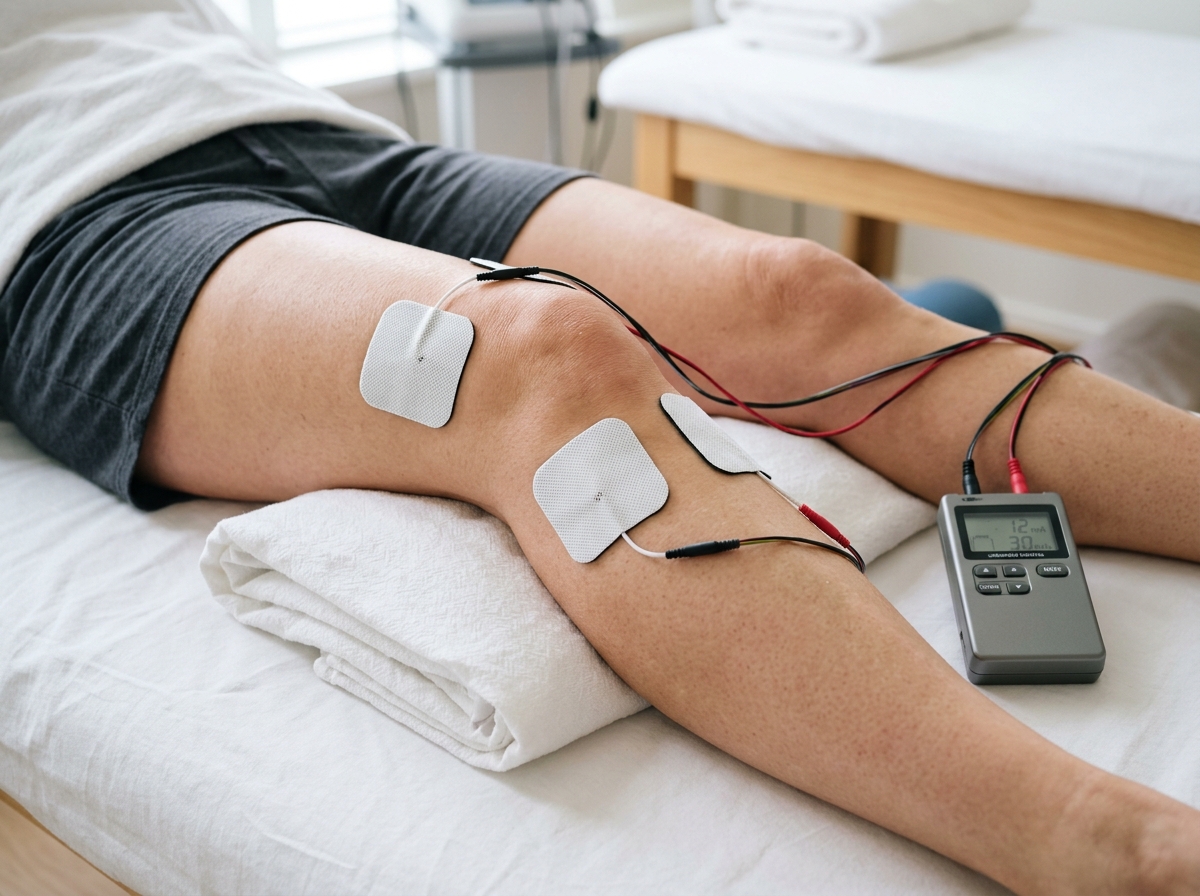
How Nerve Stimulation Supports Temporary Comfort
Transcutaneous Electrical Nerve Stimulation (TENS) uses small, self-adhesive electrode pads placed on clean skin around an area of discomfort, such as a knee joint or lumbar muscle group.
A compact stimulation unit sends gentle, adjustable electrical pulses that are commonly understood to help modulate pain signals along sensory nerve pathways and encourage natural endorphin activity.
Safe Placement and Practical Use
During a session, intensity is raised gradually until a comfortable tingling sensation is felt without muscle cramping. TENS provides temporary comfort that can make gentle stretching and mobility work easier to tolerate.
Pads must never be placed over open wounds, the front of the neck, or across the chest, and TENS is avoided in people with pacemakers.
Key Educational Takeaways
- •Provides temporary, non-invasive pain modulation via surface pads.
- •Useful bridge to help patients tolerate gentle rehabilitation movement.
- •Requires proper electrode placement and screening for implanted devices.
Related Educational Guides
Mobility and Rehabilitation · 5 min read
Physiotherapy for Knee Pain
Practical physiotherapy perspectives on managing knee osteoarthritis symptoms, walking stiffness, and joint support through paced care.
Physiotherapy · 5 min read
Physiotherapy for Back Pain
How supportive physiotherapy modalities, posture ergonomics, and gentle mobility work together to ease lower back stiffness.